
Finding a fresh produce supplier overseas is relatively easy. Determining whether that supplier can actually deliver the agreed products, quantity, quality and shipment conditions is much harder. Effective supplier verification goes beyond checking a company website or receiving a quotation. Importers should establish who they are dealing with, whether the supplier has a verifiable trading history, how the goods will be sourced and inspected, and what safeguards exist before an advance payment is made. This guide explains the practical checks fresh produce importers can use to evaluate overseas suppliers, identify warning signs and reduce the risk of costly trading disputes before committing to an order.
How to Verify a Fresh Produce Supplier’s Identity and Registration
The first step in supplier verification is confirming that the business exists and that the person offering the products is authorized to represent it. Ask for the supplier’s registered company name, business registration details, physical address and official contact information, then cross-check these details through independent sources rather than relying solely on documents provided by the seller. The company name on the quotation, commercial invoice and payment instructions should be consistent, and any request to transfer funds to an unrelated individual or third-party account deserves further investigation. Importers should also verify that the contact person genuinely works with the company by reaching out through an independently confirmed phone number or email address. As highlighted in FreshPlaza’s discussion of due diligence in international produce trading, checking a trading partner’s identity and credentials is an important precaution against commercial disputes. However, legitimate registration alone does not prove that a supplier has export experience or can fulfill a particular order.
How to Check a Supplier’s Export History and Shipment Records
A supplier’s claim of having years of export experience should be supported by evidence of actual shipments. Importers can begin by checking trade intelligence platforms such as Volza or Trademo, where available customs records may reveal shipment frequency, product categories, destination markets and trading partners. Rather than focusing only on the total number of shipments, examine whether the supplier has handled the specific fresh produce you intend to purchase and whether its trading activity is reasonably recent. Ask for redacted copies of previous bills of lading, commercial invoices or export declarations, ensuring that shipment dates, product descriptions and company details are consistent. Sensitive customer information can be removed, but the remaining evidence should still be verifiable. It is also useful to understand how the supplier manages documentation, loading and transportation through its established fresh produce export process. Remember that historical shipment records demonstrate previous trading activity, not a guarantee that the supplier can successfully fulfill your next order.
How to Verify Previous Buyers and Trade References
Trade references can provide valuable insight into a supplier’s reliability, but only when they are independently verified. Ask the supplier for references from previous international buyers, preferably companies that have purchased similar fresh produce in commercial quantities. With the buyer’s permission, contact these companies through independently verified business channels rather than relying entirely on phone numbers or email addresses supplied by the seller. Ask whether the shipments arrived as agreed, whether product quality matched the specifications, how the supplier handled delays or complaints, and whether the buyer would consider placing another order. An experienced importer should pay particular attention to how problems were resolved, since even established exporters can encounter logistical difficulties. If customer confidentiality prevents direct introductions, request alternative evidence such as redacted shipment documents or references from established logistics and inspection partners. Positive references are encouraging, but they should complement other supplier verification checks rather than replace them.
How to Confirm the Supplier Has Access to the Products
A supplier may have a registered business and an established trading history without having access to the products offered in a particular quotation. Before placing an order, importers should request recent photographs and videos of the actual produce, including the available quantity, size, condition, packing and storage location. A live video call from the warehouse, sorting facility or packing station can provide stronger evidence than promotional images, especially when the buyer asks to see specific pallets, cartons or product labels. Confirm whether the supplier owns the inventory, purchases directly from growers or sources through third-party partners, since each arrangement affects availability and delivery commitments. Ask for a realistic loading date and clarify when the agreed quantity can be reserved. For larger shipments, consider arranging an independent warehouse visit or stock verification before making a substantial advance payment. These checks help establish whether the supplier can access the required produce, although photographs and videos alone cannot guarantee that the same goods will ultimately be shipped.
How to Arrange an Independent Pre-Shipment Inspection
An independent pre-shipment inspection allows importers to verify the goods before they leave the supplier’s facility, particularly when purchasing from an unfamiliar overseas company. The buyer should appoint a qualified inspection company and agree on a written inspection scope covering product variety, quantity, size, grading, maturity, visible defects, packaging, labeling and storage conditions. For fresh produce, inspectors should examine representative samples from the actual shipment lot rather than relying on samples selected by the supplier. Where relevant, checks may also include fruit firmness, temperature, Brix levels and packaging integrity. The inspection should take place close to loading, with the inspected goods clearly identified to reduce the risk of substitution. Before releasing payment, request a dated inspection report supported by photographs, sample results and any documented nonconformities. Our guide to fruit quality control and inspection explains the checks involved in preparing fresh produce for export. Importers should remember that an inspection confirms conditions at a particular point in time; it cannot eliminate subsequent transport risks or guarantee that every item in the shipment meets the agreed specifications.
How to Verify Export Documents Before Shipment
Verifying export documents is an essential part of supplier verification, particularly when buying fresh produce from a new overseas trading partner. Before shipment, importers should request draft copies of the commercial invoice, packing list and other documents required for their destination market, such as a phytosanitary certificate, certificate of origin or import permit. Check that the supplier’s legal name, product description, quantity, net and gross weights, packaging details and delivery terms are consistent across the documents. The required transport document will depend on the shipping method, such as a bill of lading for sea freight or an appropriate road consignment note for truck shipments. Confirm applicable plant-health and customs requirements with the destination country’s authorities or a licensed customs broker, rather than relying solely on the exporter’s assurances. Where possible, verify official certificates through their issuing authorities and agree in advance when final documents must be provided, as some can only be issued after inspection or loading. Inconsistent details, altered documents or reluctance to provide reasonable documentation should be investigated before releasing payment or accepting the shipment.
How to Reduce Advance Payment Risks When Buying from Overseas Suppliers
Advance payments are one of the most sensitive parts of international fresh produce transactions, particularly when an importer is dealing with an unfamiliar supplier. Before transferring funds, verify that the beneficiary’s bank account belongs to the contracting company and independently confirm any changes to payment instructions. Avoid relying on verbal promises or transferring substantial deposits to unrelated personal accounts. Where commercially and legally feasible, consider payment arrangements such as a documentary letter of credit, a reputable escrow service or clearly defined payment milestones linked to independently verifiable conditions. For example, a buyer and seller may negotiate an initial deposit followed by a balance payment after an agreed inspection and presentation of specified shipping documents. However, an inspection certificate or scanned bill of lading does not automatically guarantee control of the cargo. The contract should explain when payments become due, what evidence is required and what happens if the supplier fails to meet the agreed conditions. Effective supplier verification reduces uncertainty, but no payment structure eliminates every commercial risk.
What to Include in a Supply Agreement Before Sending Payment
A written supply agreement should clearly define what the importer is purchasing, how the shipment will be delivered and what happens if either party fails to meet its obligations. Before sending payment, confirm the product variety, origin, agreed quantity, size range, quality grade, acceptable tolerances, packaging specifications and loading schedule. The contract should identify the applicable Incoterm and named delivery location, along with responsibility for transportation, insurance, export clearance and import formalities. Payment terms must specify the deposit amount, balance payment deadline and the documents or conditions required before funds are released. For fresh produce, it is particularly important to establish inspection procedures, temperature requirements where applicable, responsibility for transit damage and the deadline for reporting quality discrepancies. Importers should also agree on remedies for shortages, rejected goods or missed shipment deadlines, including how disputes will be resolved and which law governs the agreement. Because Incoterms do not determine when ownership transfers or how payment disputes are settled, these matters should be addressed separately. A detailed agreement cannot prevent every problem, but it provides clear commercial expectations and evidence if disagreements arise.
Red Flags That May Indicate an Unreliable Supplier
Certain warning signs should prompt importers to investigate a supplier more carefully before committing to a fresh produce order. These include unusually low quotations without a clear commercial explanation, pressure to make an immediate advance payment, inconsistent company details, and requests to transfer money to an unrelated bank account. Be cautious when a supplier refuses reasonable requests for live warehouse verification, independent inspection or evidence of previous shipments. Repeatedly changing product specifications, delivery dates or payment conditions after negotiations have begun can also indicate operational or financial problems. Another concern is a supplier who claims to own farms, warehouses or export facilities but cannot explain their actual role in sourcing and fulfilling orders. Importers should independently verify trade references, examine discrepancies between quotations and shipping documents, and confirm that the company can meet the agreed requirements. However, an unfamiliar company, a limited online presence or a low price does not automatically indicate fraud. Effective supplier verification involves evaluating multiple pieces of evidence, requesting explanations for inconsistencies and avoiding substantial financial commitments until important concerns have been resolved.
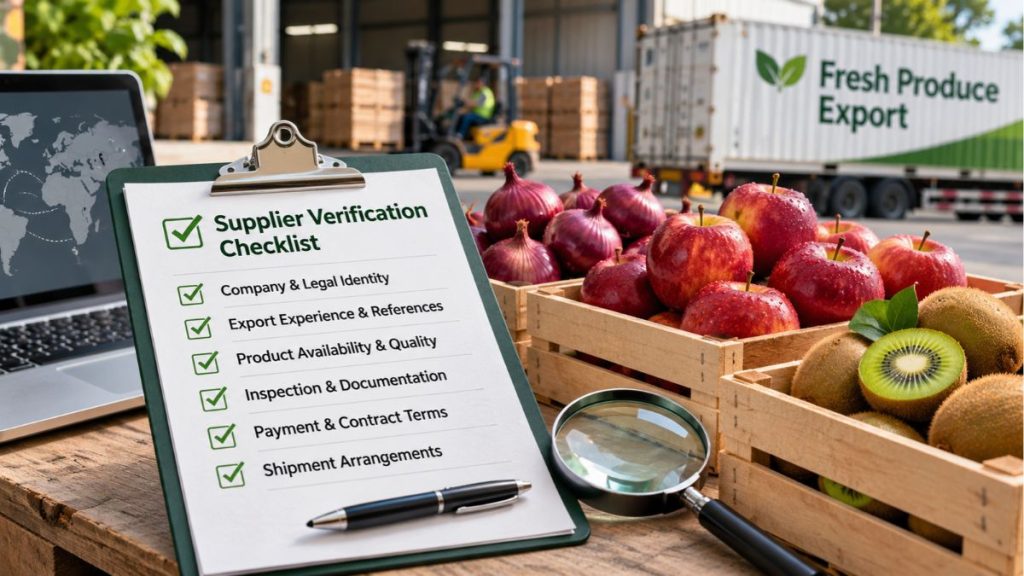
Supplier Verification Checklist Before Placing an Order
Before placing an international fresh produce order, importers should complete a practical supplier verification checklist covering the company, products, shipment arrangements and payment conditions. Start by confirming the supplier’s legal identity, business registration, authorized representative and bank account details through independent sources. Review available export records, verify previous buyer references and establish whether the supplier can access the required quantity of produce within the agreed timeframe. Request written specifications covering variety, grade, size, packaging and acceptable quality tolerances, supported by recent photographs or live stock verification. Where appropriate, arrange an independent pre-shipment inspection and confirm the documentation required for customs clearance at the destination. Before transferring funds, review the signed supply agreement, payment milestones, delivery Incoterm, shipment schedule and procedures for handling shortages, delays or quality disputes. Keep copies of quotations, inspection reports, correspondence and payment confirmations in a single transaction record. Most importantly, distinguish between information the supplier claims and evidence that can be independently verified. A reliable purchasing decision should be based on consistent documentation, transparent communication and manageable commercial risks rather than assurances alone.
Looking for a Reliable Fresh Produce Supplier in Iran?
Explore our selection of fresh Iranian red onions, red apples and kiwifruit available for wholesale export. Review our products and share your required quantities, specifications, packaging preferences and destination country to discuss availability and shipping arrangements.