
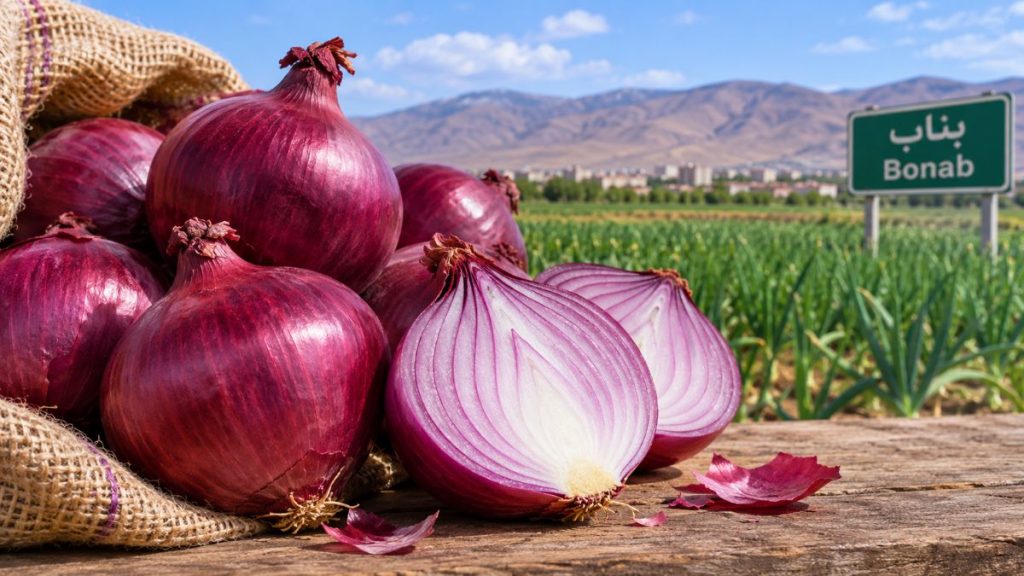
Bonab red onion is one of Iran’s well-known agricultural products, valued by wholesale buyers for its deep red colour, firm texture, and suitability for export markets. Grown in Bonab, East Azerbaijan Province, these onions are supplied to domestic markets and international destinations, including Pakistan, the UAE, and Iraq. However, quality, availability, and pricing can vary depending on the harvest season, sorting standards, and storage conditions. For importers considering Iranian red onions, understanding the characteristics of Bonab’s production helps with supplier evaluation and purchasing decisions. This guide explores the region’s growing conditions, harvest calendar, quality standards, packaging options, and export opportunities.
What Makes Bonab Red Onions Different?
Bonab red onion is recognised in Iran’s wholesale market for its deep red to purple outer skin, firm bulbs, and relatively consistent appearance when properly cultivated and sorted. Compared with onions from some other producing regions, high-quality Bonab onions often command premium prices because buyers value their visual characteristics, firmness, and suitability for handling and transportation. However, not every shipment meets the same standards, as bulb size, skin condition, maturity, and storage practices can influence the final quality. Importers should therefore evaluate the actual specifications of each shipment rather than relying on the growing region alone. For a broader understanding of how production locations affect sourcing decisions, buyers can explore our guide to onion growing regions in Iran.
Where Are Bonab Red Onions Grown?
Bonab red onions are cultivated in Bonab County, located in the southern part of East Azerbaijan Province in northwestern Iran, near Lake Urmia. The region has an established agricultural sector, with onion farming supported by local cultivation experience, seasonal growing conditions, and access to agricultural trading and sorting facilities. Bonab’s warm growing season and relatively dry conditions during parts of the production cycle can support bulb development, although final quality also depends on irrigation management, soil conditions, and harvesting practices. Following the harvest, onions are typically collected, graded, and prepared for domestic distribution or export through regional suppliers. Bonab is part of East Azerbaijan’s broader onion production network, making it an important sourcing location for buyers looking for Iranian red onions with identifiable regional origins.
Bonab Red Onion Quality and Characteristics
Bonab red onion is known for its deep reddish-purple outer skin, firm structure, and distinctive appearance, making it a recognised choice among wholesale buyers seeking quality Iranian onions. Well-matured bulbs generally have tightly attached outer layers, a solid texture, and a relatively uniform shape, although size and colour intensity can vary between farms and harvest batches. For export purposes, onions are typically evaluated based on bulb diameter, firmness, dryness, skin integrity, and the absence of visible damage, decay, or premature sprouting. Proper curing and careful sorting help reduce moisture-related problems and improve the product’s suitability for storage and long-distance transportation. Importers should request recent shipment photographs, grading specifications, and inspection details to ensure that the supplied onions meet their market requirements.
Bonab Red Onion Harvest Season
The Bonab red onion harvest season generally begins in late July and continues through September, with some harvesting extending into early autumn depending on weather conditions, planting schedules, and crop maturity. During the main harvest period, freshly harvested onions become available in larger quantities, allowing exporters to arrange sorting, grading, and packaging according to buyer requirements. After harvesting, onions must be properly cured and dried to protect their outer skins and reduce the risk of deterioration during storage and transportation. As the season progresses, export availability gradually shifts from freshly harvested onions to stored stocks, making storage conditions increasingly important for maintaining quality. International importers should consider these seasonal changes when planning purchases, as supply volumes, product condition, and wholesale prices can vary considerably throughout the year.
Storage and Availability After Harvest
After the main harvest season, Bonab red onion supplies increasingly depend on onions kept in storage facilities, where temperature, ventilation, humidity, and handling practices play an important role in preserving product quality. Properly cured onions with dry outer skins and firm bulbs are generally more suitable for extended storage, while damaged or insufficiently dried onions may deteriorate more quickly. As stored inventories gradually decrease, buyers may encounter differences in bulb condition, available sizes, and wholesale prices between suppliers. Exporters typically inspect and sort stored onions before shipment to remove damaged, sprouted, or softened bulbs and maintain consistency within each consignment. For international importers, confirming the storage history, current stock condition, and expected loading date is particularly important when purchasing Bonab red onions outside the main harvest period.
Bonab Red Onion Sizes, Sorting and Packaging
Bonab red onions are sorted and packaged according to the size, quality, and presentation requirements of different export markets. During grading, suppliers separate bulbs based on diameter, shape, firmness, and outer skin condition to achieve greater consistency within each shipment. Damaged, softened, sprouted, or excessively small onions are generally removed from export-grade batches, while acceptable size ranges are determined by the buyer’s specifications. For wholesale transportation, Bonab red onions are commonly packed in ventilated mesh bags, with 20 kg red mesh bags being one option for buyers in markets such as Pakistan. Proper packaging allows air circulation and helps reduce moisture accumulation during handling, loading, and transportation. Importers should confirm the required size range, net bag weight, sorting standards, and packaging material before placing an order to ensure that the shipment meets their market expectations.
Why Bonab Red Onions Command Premium Prices
Bonab red onion generally commands a premium price compared with red onions from several other Iranian producing regions, mainly because of its established market reputation, deep reddish colour, and quality characteristics preferred by certain wholesale buyers. However, the price difference also depends on bulb size, sorting standards, skin condition, seasonal availability, and the quality of stored inventories. Following the main harvest, prices may become firmer as available stocks decline, particularly when farmers and traders hold part of their production for later sale. In our FreshPlaza interview about Bonab red onion prices and supply, we discussed how regional quality differences and tighter availability influence export quotations. For international importers, comparing prices per metric tonne is important, but the final purchasing decision should also consider product specifications, usable quality, packaging, and transportation requirements rather than choosing the lowest quotation alone.
Exporting Bonab Red Onions to International Markets
Bonab red onions are supplied to international markets, including Pakistan, the UAE, Iraq, and other regional destinations where buyers seek Iranian onions for wholesale distribution. Export arrangements typically involve selecting suitable grades, confirming available quantities, preparing the required packaging, and coordinating transportation according to the destination country’s import requirements. For Pakistani buyers, shipments may be prepared in 20 kg red mesh bags, while specifications for other markets can differ depending on importer preferences and distribution channels. Since export availability changes throughout the season, buyers should confirm current stock conditions, loading schedules, and applicable documentation before finalising their orders. Importers interested in understanding regional demand, purchasing considerations, and sourcing opportunities can also explore our analysis of the Iranian red onion market for importers.
Looking for a Bonab Red Onion Supplier?
Source premium Bonab red onions from Iran with quality grades and packaging tailored to your market. Share your required quantity, preferred bulb sizes, packaging specifications, and destination country to discuss current availability and receive a wholesale quotation.