
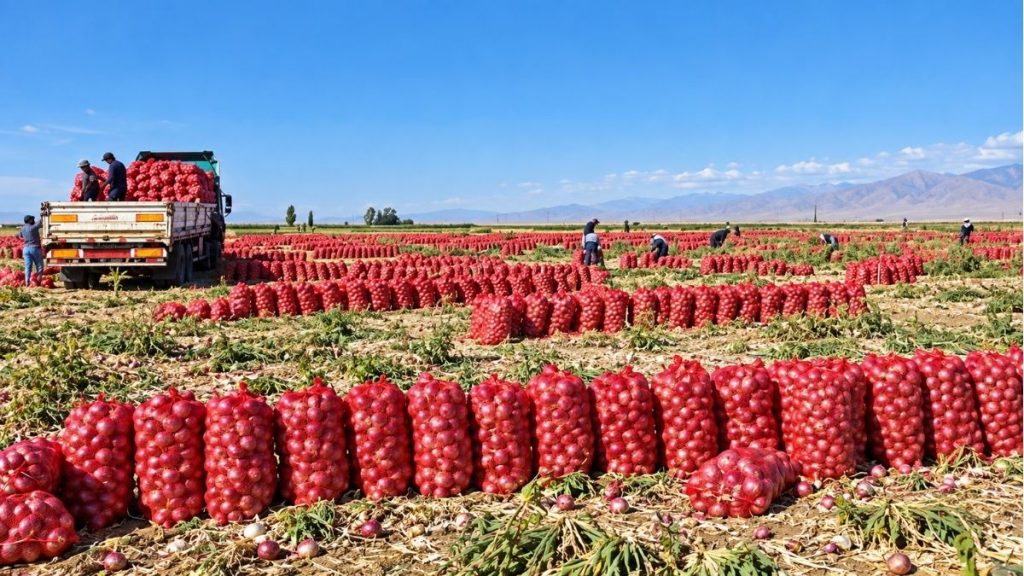
The red onion market is driven by wholesale buyers who care about much more than simply finding available produce. Importers typically compare origin, bulb size, grading, packing format, shipping terms, destination port requirements, and the quantity that can be supplied consistently. In many international enquiries, buyers specify details such as 45 mm or 50–70 mm onions, 10 kg bags, refrigerated shipment, and full 40-foot container quantities before requesting a quotation.
For importers evaluating Iranian supply, these commercial details are especially important because product quality, seasonal availability, packaging, logistics, and payment terms can all affect the final landed cost. Buyers may request quotations under CIF or CNF terms, while payment arrangements such as L/C or T/T can also form part of the negotiation.
This guide looks at the red onion market from a wholesale buyer’s perspective, with a focus on Iranian supply. It covers market conditions, harvest availability, sizes and grades, pricing factors, packaging options, international shipping, and the main points importers should check before placing a commercial order.
Red Onion Market Overview for Importers
The red onion market is strongly influenced by wholesale demand, seasonal supply, product size, packing requirements, and international freight costs. Importers rarely buy based on price alone; they usually define commercial specifications before requesting a quotation.
Typical enquiries may include requirements such as 45 mm or 50–70 mm onions, 10 kg bags, refrigerated shipment, and quantities of one 40-foot container. Buyers may also specify the destination port and request offers under terms such as CIF or CNF.
For exporters, this means that competing in the red onion market depends on supplying consistent quality, meeting the requested specifications, and giving buyers clear information about availability, packing, shipping terms, and delivery conditions.
Iran’s Position in the Red Onion Market
Iran is a relevant sourcing origin for regional buyers looking for fresh red onions, particularly for markets in the Middle East and nearby Asian countries. Its geographic position can make Iranian supply attractive where buyers are comparing transit time, freight cost, seasonal availability, and access to fresh produce.
Importers usually evaluate Iranian onions based on size consistency, firmness, skin condition, grading, packing, and available volume rather than origin alone. For wholesale orders, buyers may request specific calibers such as 45 mm or 50–70 mm, together with clearly defined bag sizes and container quantities.
Buyers reviewing Iranian supply can also compare available grades and commercial options on the red onion supplier page before requesting a quotation.
Iranian Red Onion Harvest Season and Availability
Iranian red onion supply is seasonal, and availability can vary by growing region, harvest timing, and crop conditions. For importers, this means it is important to confirm the current harvest window, available quantity, and expected loading schedule before planning a shipment.
Wholesale buyers often ask whether the required volume can be supplied continuously, especially for orders of one or more full containers. They may also want to know the packing date, storage condition, and how soon the onions can be loaded after confirmation.
For larger programs, buyers should check availability in advance so that size, grade, packing format, and shipment timing can all be matched to the same order.
Red Onion Sizes, Grades, and Quality Standards
For wholesale buyers, onion size and consistency are often more important than appearance alone. Importers may request specific calibers such as 45 mm+, 50–70 mm, or another defined size range depending on their market.
A commercial red onion order should also be checked for firm bulbs, dry outer skin, uniform color, low damage levels, and consistent grading across the shipment. Buyers usually expect the supplied quantity to match the agreed specification rather than receiving mixed sizes or uneven quality.
Before confirming an order, both sides should clearly agree on the size range, grade, acceptable defects, packing format, and required quantity so there is less risk of disagreement after delivery.
What Affects Red Onion Market Prices?
Red onion prices can change significantly from one shipment to another because buyers are not paying only for the onions themselves. The final offer is influenced by harvest availability, bulb size, grade, packing type, order volume, freight cost, destination port, and Incoterms.
For example, an order for 50–70 mm graded onions in 10 kg bags may be priced differently from a mixed-size shipment in another packing format. Freight can also make a major difference, particularly when buyers request CIF or CNF quotations instead of an ex-warehouse or FOB-style price.
Importers should therefore compare quotations on the same specification and delivery terms rather than looking only at the price per kilogram or ton. For broader agricultural price monitoring, buyers can also review the FAO food price data and analysis, which tracks international, producer, wholesale, and retail agricultural price information.
Packaging Options for Wholesale Red Onion Orders
Packaging is an important part of a wholesale red onion order because it affects ventilation, handling, transport efficiency, and the condition of the onions on arrival. Importers commonly specify the required pack size in advance, such as 10 kg mesh bags, depending on their market and distribution needs.
Before loading, buyers and exporters should confirm the bag type, net weight, labeling requirements, palletization if needed, and total quantity per container. Good packaging should allow sufficient airflow while protecting the onions from excessive pressure and handling damage during transport.
For full-container orders, the packing format should also be planned together with the required size grade and shipment quantity so the final load matches the buyer’s commercial specification.
Shipping Iranian Red Onions to International Markets
Shipping arrangements can have a major effect on the final cost and condition of a wholesale red onion order. Importers usually specify the destination port, required quantity, container type, and preferred Incoterm before asking for a final quotation.
For larger orders, buyers may request a full 40-foot container, while the choice between ventilated and temperature-controlled transport depends on the route, transit time, season, and buyer requirements. Proper ventilation and careful loading are important because excess moisture and poor airflow can reduce onion quality during transit.
Quotations should also make the delivery basis clear. Terms such as FOB, CNF/CFR, or CIF determine which transport costs and responsibilities are included, so buyers should compare offers using the same shipping terms and destination.
How to Source Red Onions from Iran
Importers sourcing red onions from Iran should send a clear buying enquiry from the beginning. The more precise the requirement, the easier it is for the exporter to provide an accurate quotation and confirm availability.
A typical wholesale enquiry should include the required size or caliber, grade, packing, quantity, destination port, preferred Incoterm, and payment terms. For example, a buyer may request 50–70 mm red onions, packed in 10 kg mesh bags, one 40-foot container, CIF destination port, with payment by T/T or L/C.
Before confirming the order, importers should also ask for recent product photos or videos, packing details, loading schedule, and available quantity. Clear specifications at the quotation stage help reduce misunderstandings and make it easier to compare offers from different suppliers.
Conclusion
For importers, the red onion market is ultimately about matching the right product specification with reliable supply, suitable packing, and workable shipping terms. Size, grade, season, quantity, destination, and Incoterm should all be agreed clearly before an order is confirmed.
Iran can be a practical sourcing option for buyers looking for fresh red onions in commercial quantities, especially when specifications are defined from the beginning. Clear communication at the enquiry stage helps buyers compare offers more accurately and reduces problems later in the shipment process.