
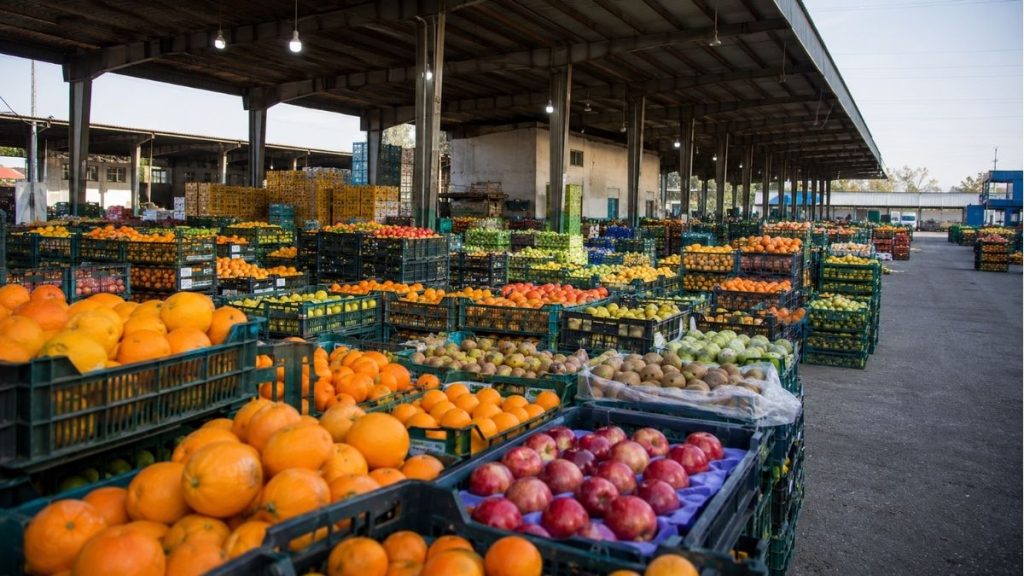
Iran fruit export market gives wholesale buyers access to a wide range of fresh produce, including apples, kiwi, citrus fruits, grapes, pomegranates and other seasonal fruits grown across different regions of Iran.
For importers and distributors, successful sourcing depends on more than product availability. Harvest season, grading, packing, documentation and shipment preparation all influence product quality and reliability at the destination market.
This guide covers seven essential factors wholesale buyers should consider when sourcing fruit from Iran, from seasonal availability and quality standards to packing and shipping requirements.
Iran Fruit Export Market Overview
The Iran fruit export sector connects international importers, distributors and wholesale buyers with fresh fruits grown across different agricultural regions of Iran. Because production conditions vary by region, buyers can encounter different harvest periods, product characteristics and commercial availability throughout the year. This creates several sourcing windows for buyers looking for fresh fruit from Iran, although actual availability should always be confirmed before quotation. Buyers researching production and agricultural data can also refer to the official FAOSTAT database.
For commercial buyers, the value of Iran fruit export is not simply access to agricultural products. Successful sourcing depends on whether the available fruit can meet the buyer’s required specifications for size, appearance, firmness, maturity, grading and packing. Destination-market requirements also matter because the same fruit may require different preparation depending on transport time, sales channel and buyer expectations.
A reliable fruit export process therefore involves several connected stages. Produce must first be sourced according to the requested specification, followed by sorting and grading to create a more consistent commercial lot. Packing should then be selected according to the fruit type and expected transport conditions. Shipment preparation, documentation and timing must also be coordinated so that the product can move from the sourcing point toward its destination without unnecessary delays.
Buyers interested in sourcing from Iran can review the current fresh fruit range, which includes products such as Iranian red apples and Iranian kiwi. These products have different harvest periods, storage characteristics and packing requirements. For this reason, buyers should confirm the required grade, size range, quantity and packing format before requesting a final commercial offer.
Seasonality also influences the Iran fruit export market. Some fruits may be available mainly around their harvest period, while others can remain commercially available for longer when suitable storage conditions are used. Availability, however, does not automatically mean that every lot is equally suitable for export. Product condition, maturity and expected transport duration should all be considered when selecting fruit for a specific destination.
Because fresh fruit is perishable, timing becomes especially important. Harvest date, handling, storage conditions, loading schedule and transport duration can all affect product condition on arrival. A shipment intended for a nearby regional market may have different requirements from one traveling over a longer route. Wholesale buyers should therefore evaluate the full supply process instead of comparing suppliers only by price per kilogram or carton.
Another important consideration in Iran fruit export is communication between buyer and supplier. Clear specifications at the beginning of the inquiry help reduce misunderstandings later in the process. Buyers should provide information such as destination, required quantity, preferred size or grade, packing format and any specific labeling or documentation requirements. This allows sourcing and shipment planning to be based on the actual commercial requirements of the buyer.
For importers and distributors, the strongest sourcing decisions usually come from evaluating the combination of product quality, current availability, packing capability, shipment preparation and communication. Price remains important, but it should be considered together with these factors when assessing fresh fruit export opportunities from Iran.
Best Iranian Fruits for Wholesale Export
Iran offers a diverse agricultural base for wholesale fruit sourcing, but the best products for export are not simply the fruits with the highest production volume. For importers and distributors, the most suitable choices depend on destination-market demand, harvest timing, expected transit duration, storage conditions, packing requirements and the quality specifications requested by the buyer. A strong Iran fruit export strategy therefore focuses on products that can be sourced consistently and prepared for commercial shipment rather than presenting an unnecessarily large product list.
For wholesale buyers, product selection should begin with the requirements of the destination market. Size, appearance, firmness, maturity and packing preferences can differ between importers, retail chains, wholesale markets and food-service buyers. Before confirming a fruit for export, these requirements should be compared with current availability in Iran so that the selected product can realistically meet the buyer’s expectations.
Iranian red apples are one of the practical options for buyers sourcing fresh fruit from Iran. Apples can be graded according to factors such as size, appearance, color and overall condition, allowing commercial lots to be prepared around defined buyer specifications. Depending on the destination and sales channel, packing can also be adjusted to provide suitable protection and presentation during transport.
When sourcing red apples, buyers should avoid relying only on general descriptions such as “export quality.” A more useful inquiry specifies the required size range, color expectations, firmness, acceptable surface condition, quantity and preferred carton format. These details make it easier to prepare an accurate quotation and identify fruit that matches the intended market.
Iranian kiwi is another important product within the Iran fruit export range. Kiwi is particularly sensitive to maturity and firmness, making harvest timing and shipment planning important considerations. Fruit selected for wholesale export should be appropriate for the expected transport period and the condition required when it reaches the importer.
For kiwi buyers, grading and packing should be confirmed before shipment preparation. Size consistency, firmness, appearance and carton configuration can influence both commercial presentation and transport performance. Because requirements vary between markets, buyers should communicate their specifications rather than assuming that one standard export grade or packing format is suitable for every destination.
The broader fresh fruit range can develop according to seasonal availability and genuine buyer demand. For a supplier, however, expanding the catalogue should not come at the expense of sourcing reliability. A focused selection of fruits that can be sourced, graded, packed and prepared consistently is generally more valuable to wholesale buyers than a long catalogue of products with uncertain availability.
This is especially relevant for buyers evaluating different Iran fruit export suppliers. The number of products shown on a website is less important than the supplier’s ability to provide updated availability, clear specifications, suitable packing and realistic shipment planning. Importers should therefore evaluate each fruit individually and confirm that the supplier can meet the commercial requirements of the intended market.
For Iran Foodstuff, the current focus is on a selected range of fresh fruits rather than presenting every fruit produced in Iran. This allows wholesale inquiries to concentrate on products for which specifications, packing and availability can be discussed more clearly. As sourcing capacity and buyer demand develop, additional fruits can be introduced when they can be supported by a reliable export process.
| Fruit | Wholesale Strength | Key Buyer Considerations |
|---|---|---|
| Red Apple | Familiar product with clear grading and packing options | Size, color, firmness, surface condition and carton format |
| Kiwi | Suitable for seasonal wholesale and retail supply | Firmness, maturity, size, transit time and packing |
| Other Seasonal Fruits | Potential sourcing based on season and buyer demand | Availability, grade, volume and destination requirements |
Seasonality and Availability of Iranian Fruits
Seasonality is one of the most important factors in Iran fruit export because fresh fruit availability changes throughout the year according to harvest timing, growing region, weather conditions and storage capacity. Unlike manufactured goods, agricultural products cannot always be supplied in exactly the same quantity and condition every month. Wholesale buyers should therefore confirm current availability before planning quantities, packing specifications, quotation validity or shipment dates.
For importers, understanding seasonality helps set realistic expectations about product quality and commercial availability. Fruit offered close to its main harvest period may provide greater flexibility in terms of size selection, appearance, firmness and available volume. At the same time, being in season does not automatically mean that every available lot is suitable for export. Product maturity, handling conditions and expected transit time still need to be considered before fruit is selected for a specific destination.
Products such as red apples can remain commercially available beyond the main harvest period when suitable cold-storage conditions are used. This can extend the sourcing window for wholesale buyers, but stored fruit should still be evaluated according to its current firmness, appearance and overall condition rather than assumed to have the same characteristics as recently harvested produce. In Iran fruit export, the condition of the specific lot available at the time of inquiry matters more than a general seasonal description.
Kiwi availability also depends on harvest maturity, storage conditions and the specifications required by the destination market. For buyers planning longer transport routes, firmness and maturity can become particularly important because the fruit must tolerate handling and transit while still arriving in commercially acceptable condition. A buyer supplying a nearby wholesale market may therefore require different product characteristics from an importer serving a destination with a longer logistics chain.
Another important point is that the earliest available fruit is not necessarily the best choice for export. Buyers may be tempted to secure the first product entering the market at the beginning of a season, but maturity and transport suitability should be evaluated carefully. Fruit that is too immature or too advanced for the expected journey may create problems later, even when its appearance is acceptable at the time of packing.
Seasonal conditions can also influence pricing and exportable supply. Crop volume, weather, domestic demand, storage availability and the number of buyers active in the market may all affect commercial conditions during a particular period. For this reason, prices quoted for Iran fruit export should be treated as time-sensitive rather than assumed to remain unchanged throughout an entire season.
Wholesale buyers planning repeated shipments should discuss expected purchasing periods in advance whenever possible. Early communication about estimated quantity, preferred packing, destination and required quality can make it easier to assess whether suitable fruit is likely to be available during the intended shipping window. This is particularly useful for importers who need continuity of supply rather than a single spot shipment.
Storage can extend availability, but it should not be viewed as a substitute for proper seasonal planning. The longer fruit is stored, the more important it becomes to evaluate its present commercial condition before confirming a purchase. Buyers should request updated information about firmness, appearance, grading and packing rather than relying only on the original harvest period.
Seasonality can also vary from one production year to another. Agricultural conditions are not identical every season, so harvest timing, crop volume and exportable quality may shift. A sourcing plan that worked well in one year should therefore not automatically be applied to the next without checking current market conditions.
For successful Iran fruit export, wholesale buyers should request updated information on product availability, grade, current condition, packing options and expected lead time before confirming a shipment. Understanding the relationship between harvest timing, storage and transport requirements helps buyers select fruit that is better suited to their destination and reduces the risk of making purchasing decisions based only on price or theoretical seasonal availability.
| Fruit | Jan | Feb | Mar | Apr | May | Jun | Jul | Aug | Sep | Oct | Nov | Dec |
|---|---|---|---|---|---|---|---|---|---|---|---|---|
| Red Apple | Peak | Peak | Storage | Storage | Storage | Low | Low | New Crop | Avail. | Peak | Peak | Peak |
| Kiwi | Storage | Storage | Low | Low | Low | Low | Low | Low | Avail. | Peak | Peak | Peak |
Quality Standards and Product Grading
Quality standards are a central part of successful Iran fruit export because wholesale buyers need consistency across the fruit they receive, not simply acceptable appearance in a few sample pieces. Importers usually evaluate fresh fruit according to measurable and visible characteristics such as size, color, firmness, maturity, surface condition, shape and overall uniformity. The exact specification can vary by destination market, sales channel and buyer type, so quality requirements should be agreed clearly before grading and packing begin.
For commercial shipments, broad descriptions such as “good quality,” “premium” or “export quality” are often too subjective. Two suppliers may use the same description while referring to very different size ranges, color levels or acceptable defect tolerances. In Iran fruit export, measurable specifications reduce this uncertainty and make it easier for both buyer and supplier to work from the same expectations.
Grading is the process of separating fruit into more consistent commercial groups according to defined characteristics. Depending on the product, grading may consider diameter, weight, shape, color, firmness, maturity and visible surface defects. The purpose is not only to improve appearance but also to create a shipment with greater consistency, which is especially important for importers supplying wholesale markets, retailers or distributors with specific presentation requirements.
Size grading is one of the most common buyer requirements. A shipment containing a very wide mixture of small and large fruit can be difficult to price and market consistently. By confirming an acceptable size range before packing, the buyer can receive a more predictable commercial lot and compare quotations more accurately between different suppliers.
Appearance is another important factor in Iran fruit export. Buyers may specify expectations for color development, shape, surface cleanliness and the acceptable level of cosmetic defects. These requirements should reflect the intended market. Fruit destined for premium retail presentation may require stricter visual uniformity than produce intended for a general wholesale market.
For products such as Iranian red apples, buyers may consider color, diameter, firmness, shape and surface condition when defining the required grade. Red apples intended for longer transport should also be selected with sufficient firmness and appropriate maturity so that handling, storage and transit do not reduce their commercial value before arrival.
Iranian kiwi also requires careful evaluation of firmness and maturity. Fruit that is too soft may be more vulnerable to pressure and handling damage, while fruit selected at an unsuitable maturity stage may not perform as expected during transport or subsequent ripening. For this reason, the destination and expected transit duration should be considered when setting kiwi specifications.
Firmness is particularly important for fresh fruit intended for export because it can influence how well the product tolerates handling, packing, loading and transport. A fruit that appears visually attractive but lacks sufficient firmness may be unsuitable for a longer journey. Conversely, fruit for a nearby market may be selected at a different maturity stage when transit time is shorter.
Quality control should also consider uniformity across the shipment. Importers generally expect cartons within the same agreed grade to contain fruit that is reasonably consistent in size and appearance. Excessive variation can make downstream selling more difficult and may create disputes if the delivered product does not match the specification discussed before shipment.
Another useful practice in Iran fruit export is confirming the specification before a quotation is finalized. Buyers should provide the required size range, grade, color expectations, acceptable defects, packing format and intended destination whenever possible. These details allow sourcing and pricing to be based on a specific commercial requirement instead of a vague request for “best quality.”
Photos, videos or representative samples can also help communicate expectations, but they should support rather than replace measurable specifications. Lighting, camera angle and individual sample selection can make fruit appear different from the full shipment. Written requirements for size, grade and acceptable condition remain important for reducing misunderstandings.
Destination-market requirements may also influence grading decisions. Different buyers can have different expectations regarding size, appearance, labeling and packing. A shipment suitable for one wholesale market may therefore not automatically meet the needs of another. This is why quality planning should begin with the buyer’s market rather than applying one universal export grade to every shipment.
Wholesale buyers should ultimately assess quality as part of the complete Iran fruit export process. Sourcing suitable fruit, grading it consistently, selecting the correct maturity level and matching the product to the expected transport conditions are all connected. Clear specifications before shipment preparation help create a more predictable commercial result and allow buyers to compare suppliers on more than price alone.
Size
Diameter, weight and consistency across the lot
Color
Color development suited to buyer expectations
Firmness
Condition suitable for handling and transport
Maturity
Selected according to transit time and destination
Appearance
Shape, surface condition and visible defects
Clear, measurable specifications help wholesale buyers and suppliers agree on the required commercial grade before packing begins.
Export Packing Options for Fresh Fruit
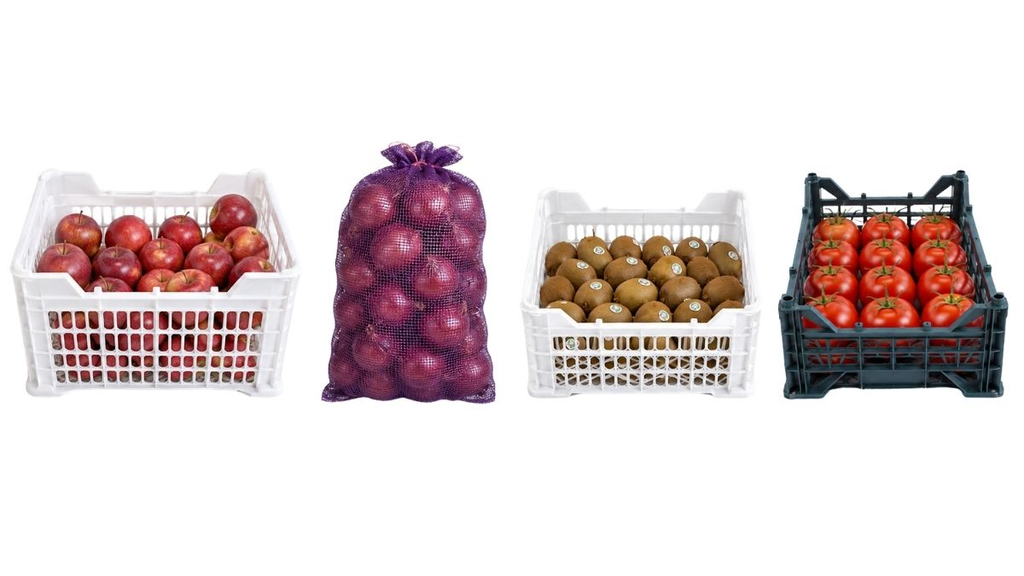
Export packing is an important part of successful Iran fruit export because fresh fruit must be protected through several stages of handling before it reaches the buyer. Packing needs to support the product during loading, storage, transport and unloading while also matching the commercial expectations of the destination market. For wholesale buyers, packing should therefore be discussed before quotation rather than treated as a final detail.
The most suitable packing format depends on the fruit itself, the expected transit time, the shipment method and the buyer’s requirements. A carton that works well for a short regional route may not offer the same level of protection for a longer journey. Weight limits, ventilation, stacking strength and internal protection should all be considered when preparing fruit for export.
Common packing decisions include carton dimensions, net weight, number of fruits per carton, internal trays or separators, ventilation openings and labeling. These details can affect both product protection and total shipment cost. In Iran fruit export, buyers should therefore compare packing specifications together with the product price rather than looking only at the cost per kilogram.
Carton strength is especially important because fruit shipments may be stacked during storage and transport. Weak cartons can lose shape under pressure, which may increase the risk of compression damage to the fruit inside. The required strength depends on factors such as carton weight, stacking pattern, pallet configuration and expected transport conditions.
Ventilation is another important consideration. Fresh fruit continues to respire after harvest, so appropriate airflow can help support suitable transport conditions. The design and placement of ventilation openings should provide airflow without weakening the carton excessively. Packing should therefore be selected according to the characteristics of the fruit rather than using one standard box for every product.
Internal protection can also be useful for reducing movement and direct contact between fruits. Depending on the product and buyer requirements, exporters may use trays, separators, liners or other protective materials. The objective is to limit bruising, rubbing and pressure while keeping the packing practical for wholesale handling.
Red apples are a good example of a product where packing specifications can influence the final commercial presentation. Apples may be packed in export cartons with internal trays or separators depending on the required protection level, size range and destination market. Buyers should confirm carton weight, fruit count or size specification, and any presentation requirements before shipment preparation.
For red apples, uniform packing can also help maintain consistency across the shipment. When fruits are graded to a defined size range and packed according to an agreed configuration, cartons are easier for importers and distributors to handle, store and resell. This is one reason why grading and packing should be planned together rather than treated as separate stages of the Iran fruit export process.
Kiwi also requires careful packing because excessive pressure or movement can increase the risk of bruising and softening during handling. Firmness, fruit size and expected transit duration should be considered when selecting the packing format. A buyer sourcing kiwi for a longer route may require different protection or carton specifications from one purchasing for a nearby market.
Net carton weight is another commercial detail that should be agreed clearly. Different wholesale markets may prefer different carton sizes and weights depending on handling practices, retail presentation and transport economics. A heavier carton may reduce the number of individual packages, but it can also increase pressure on the fruit if the packing structure is not appropriate.
Labeling requirements should also be confirmed before packing. Depending on the buyer and destination, cartons may need information such as product name, origin, net weight, packing date, grade or other commercial markings. Importers should provide any specific labeling requirements early so that they can be incorporated into shipment preparation without last-minute changes.
Palletization and container planning can also affect packing decisions in Iran fruit export. Carton dimensions influence how efficiently a pallet or container can be loaded, while poor stacking patterns may waste space or reduce stability. For larger wholesale shipments, packing should therefore be considered together with loading efficiency and transport requirements.
Buyers should also consider whether their destination market has specific packaging rules or preferences. Some importers may request particular carton materials, labels or pallet configurations. These requirements should be communicated before the quotation is finalized because changing the packing format later can affect cost, preparation time and loading plans.
For wholesale sourcing, the best packing option is not always the most expensive or visually elaborate one. The objective is to select a format that provides suitable protection, supports efficient handling and matches the buyer’s commercial needs. Overpacking can increase cost unnecessarily, while insufficient packing can create a greater risk of damage.
Before confirming an Iran fruit export shipment, buyers should provide clear information about preferred carton weight, packing style, labeling, pallet requirements and destination. When these details are agreed early, sourcing, grading and packing can be coordinated more accurately and the final shipment can be prepared around the buyer’s actual market requirements.
Documentation and Shipping Requirements
Documentation is an important part of successful Iran fruit export because fresh produce shipments must comply with procedures at origin as well as the import requirements of the destination market. The exact paperwork can vary by country, product, transport method and buyer arrangement, so documentation should be confirmed before packing and shipment preparation are finalized.
For wholesale buyers, documentation is not simply an administrative step at the end of the transaction. Missing or incorrect paperwork can delay customs procedures, create additional storage costs or complicate the release of the shipment at destination. For this reason, buyers should communicate their documentary requirements early in the Iran fruit export process.
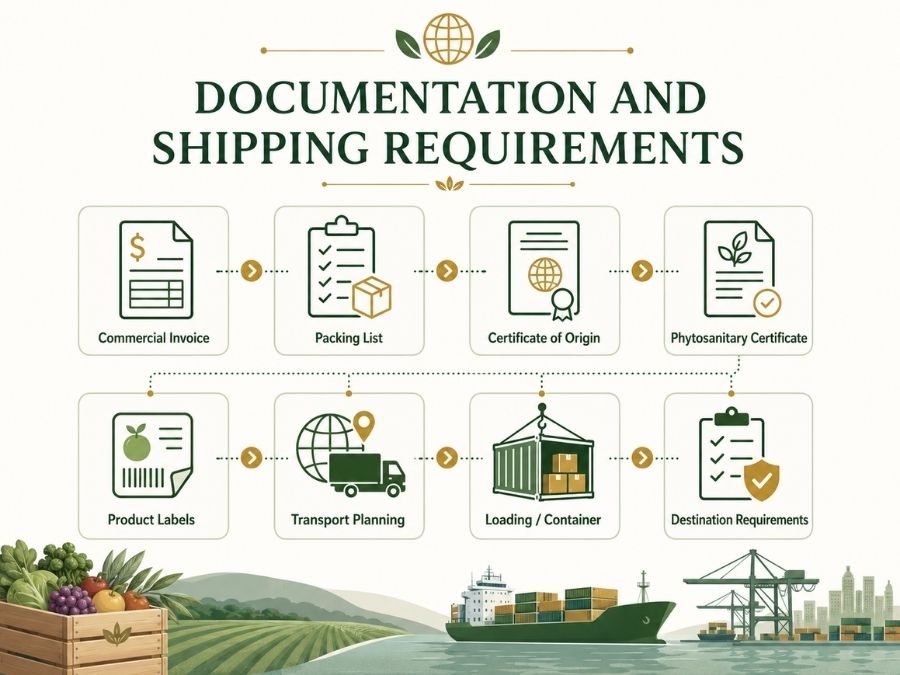
Commercial documents may include an invoice, packing list, certificate of origin and relevant transport documents. Depending on the destination market and the type of fruit, phytosanitary documentation may also be required. Additional certificates or declarations can be requested by certain countries, importers or authorities, so the final document set should always be checked for the specific shipment.
The commercial invoice normally identifies important transaction details such as the seller, buyer, product description, quantity, value and agreed commercial terms. The packing list provides more detailed information about the physical shipment, including the number of cartons, net and gross weight and packing configuration. Consistency between these documents is important because discrepancies can create unnecessary questions during the import process.
A certificate of origin may also be required to confirm the country where the goods originate. For buyers sourcing fresh fruit from Iran, this document can form part of the standard documentation package depending on the destination and trade requirements. Buyers should confirm whether any particular format, legalization or supporting documentation is required before shipment.
Phytosanitary requirements are especially relevant to fresh agricultural products. Fruit entering another country may need to satisfy plant-health rules intended to control pests and diseases. Depending on the destination, an official phytosanitary certificate may be required before the shipment can be imported. Wholesale buyers can review international plant-health standards and phytosanitary guidance through the International Plant Protection Convention (IPPC). This is one reason why destination-country requirements should be checked before the fruit is packed and loaded.
In Iran fruit export, documentation and physical product preparation should be coordinated rather than handled separately. Information shown on cartons, labels, invoices and packing lists should match the agreed product specifications. If the buyer requires specific labeling, grade information, country-of-origin markings or carton details, these requirements should be communicated before printing and packing begin.
Shipping arrangements are equally important because fresh fruit is sensitive to time and handling conditions. The selected transport method should be suitable for the product, expected transit duration and destination. Factors such as route, loading schedule, container type and expected delivery time can all influence the commercial condition of the fruit on arrival.
Temperature management may also be relevant depending on the fruit and the transport route. Maintaining suitable conditions can help reduce quality deterioration during transit, but requirements differ between products. Red apples, kiwi and other fruits may have different temperature, ventilation and maturity considerations, so logistics planning should reflect the characteristics of the specific shipment rather than applying one identical method to every fruit.
Container and loading decisions can also affect the performance of an Iran fruit export shipment. Cartons should be arranged in a way that supports stability, airflow and efficient use of available space. Poor loading can increase pressure on cartons, reduce ventilation or create movement during transport. Packing design and loading planning should therefore be considered together.
The transport route should also be evaluated carefully. A shorter route can reduce transit exposure, while longer journeys require greater attention to maturity, firmness, packing and storage conditions. Buyers should provide the final destination or delivery point when requesting a quotation so that shipment planning can be based on a realistic logistics route.
Lead time is another consideration. Preparing fresh fruit for export may involve sourcing, grading, packing, documentation and transport coordination. Buyers should therefore avoid assuming that fruit can always be loaded immediately after a quotation is accepted. The expected preparation schedule should be discussed in advance, particularly for larger wholesale quantities or shipments requiring specific packing.
Wholesale buyers should also make clear which party is responsible for each stage of transport and documentation. The commercial terms agreed between buyer and supplier can affect responsibility for freight, insurance, delivery and certain costs. These details should be confirmed in the quotation or commercial agreement so that both sides understand what is included.
Destination-country requirements can change, and different ports or importers may request different supporting information. For this reason, buyers should not rely solely on documentation used for a previous shipment to another market. Before confirming an Iran fruit export transaction, the document requirements for the specific destination should be reviewed again.
When requesting a quotation, wholesale buyers should provide the destination country, delivery point, required product, estimated quantity, preferred packing and any known documentation or labeling requirements. Providing this information early allows sourcing, packing, paperwork and shipment preparation to be coordinated more accurately.
A well-prepared documentation and logistics process helps reduce avoidable delays and supports a smoother movement of fresh fruit from Iran to the destination market. For importers, evaluating these capabilities alongside product quality and price provides a more complete picture of the reliability of an Iran fruit export supplier.
What Wholesale Buyers Should Check Before Sourcing From Iran
Before sourcing fresh fruit from Iran, wholesale buyers should evaluate more than the quoted price. A reliable purchase depends on the combination of product quality, current availability, packing, documentation, shipment planning and clear communication. In Iran fruit export, a low price is not necessarily a good commercial decision if the product, packing or logistics do not match the buyer’s actual requirements.
The first step is to define the product specification as clearly as possible. Buyers should confirm the exact fruit, preferred size range, grade, maturity, appearance, quantity and packing format required. The more precise the inquiry, the easier it becomes for the supplier to check availability and prepare a quotation based on a realistic commercial specification.
For products such as red apples, buyers may need to specify diameter, color, firmness, acceptable surface condition and preferred carton weight. For kiwi, firmness, maturity, size and packing can be especially important because these factors influence how the fruit performs during transport and at the destination market.
Wholesale buyers should avoid relying only on broad terms such as “premium,” “first grade” or “export quality.” These descriptions can be interpreted differently by different suppliers. In Iran fruit export, measurable specifications such as size range, carton weight, acceptable appearance and maturity provide a much clearer basis for quotation and quality control.
Current availability should also be confirmed before a buyer makes a purchasing decision. Fresh fruit supply changes according to harvest timing, storage conditions, crop volume and domestic demand. A product that was readily available several weeks earlier may have a different price, grade distribution or available quantity when the buyer is ready to place an inquiry.
Lead time is another important consideration. Sourcing, sorting, grading, packing, documentation and transport preparation all require coordination. Buyers should therefore ask how long the supplier expects to need before the shipment can be prepared. This is particularly important for larger quantities or when the buyer requires customized packing or labeling.
Buyers should also review the supplier’s ability to prepare the fruit for the intended destination. A supplier may have access to the product but still need suitable grading, packing and shipment coordination to handle a commercial export. For this reason, sourcing capability should be evaluated together with export preparation capability.
Packing should be discussed before the quotation is finalized. Buyers should specify preferred carton weight, internal protection, labeling and any pallet or container requirements. In Iran fruit export, packing can affect both product condition and logistics cost, so quotations should clearly indicate what packing format is included.
Documentation requirements should also be reviewed early. Depending on the destination, fresh fruit shipments may require commercial documents, certificates of origin, phytosanitary documentation or other supporting paperwork. Buyers should provide any destination-specific requirements they already know so that the supplier can check them before shipment preparation begins.
Transport planning is equally important. Buyers should confirm the destination country, delivery point, preferred transport method and any relevant transit-time considerations. A shipment traveling a longer distance may require different maturity, firmness and packing decisions from one moving to a nearby regional market.
Communication quality can be a useful indicator when comparing Iran fruit export suppliers. A professional supplier should be able to answer questions about current availability, grade, packing, lead time and shipment preparation clearly. Slow, vague or inconsistent communication at the quotation stage can become a larger problem once a time-sensitive fresh produce shipment is being prepared.
Wholesale buyers should also confirm exactly what is included in the quotation. The quoted price may cover only the fruit, or it may include sorting, packing, loading, documentation or certain transport arrangements. Comparing two quotations without understanding these differences can create a misleading impression that one supplier is significantly cheaper than another.
It is useful to ask for current product photos or videos when appropriate, particularly for fresh agricultural products where condition can change over time. Visual material can help buyers understand the available lot, although it should be used together with measurable specifications rather than as a substitute for grading requirements.
For buyers evaluating suppliers over the longer term, consistency can be more valuable than obtaining the lowest price on a single shipment. A supplier that communicates accurately, follows agreed specifications and prepares shipments predictably can reduce sourcing risk and make repeated purchasing easier. This is especially important for importers and distributors who need a dependable Iran fruit export supply relationship rather than a one-time transaction.
Buyers should also consider whether the supplier’s current product range matches their actual sourcing needs. The fresh fruit range should be reviewed according to real availability and export capability rather than simply the number of products listed. A focused range that can be sourced and prepared reliably can be more useful than a very large catalogue with uncertain supply.
Before confirming a shipment, the buyer and supplier should have a shared understanding of the product, grade, quantity, packing, destination, documentation and expected timeline. When these commercial details are agreed in advance, misunderstandings are less likely and the overall Iran fruit export process becomes easier to manage.
For wholesale buyers, the final sourcing decision should therefore be based on overall reliability rather than price alone. Product quality, specification accuracy, availability, packing, documentation, logistics preparation and communication all contribute to the commercial success of a fresh fruit shipment from Iran.
Planning to Source Fresh Fruit from Iran?
Successful Iran fruit export sourcing starts with clear specifications, current availability and realistic packing and shipment requirements. Wholesale buyers should confirm the product, grade, quantity, destination and preferred packing before requesting a final quotation.
If you are looking for fresh fruit from Iran, review our fresh fruit range or contact Iran Foodstuff with your sourcing requirements.